Enku (not her real name), a 45-year-old woman from East Gojjam, lived for nearly two decades with painful swelling in her legs. The condition worsened over time, eventually affecting both legs and causing severe discomfort. She later learned the illness was podoconiosis, or “podo”— a disease surrounded by stigma in her community due to the misconception it is contagious. Because of this misunderstanding, Enku faced discrimination, and even her husband divorced her.
Her situation changed when health workers, supported by IOCC, visited her community to raise awareness about podoconiosis and its treatment. Encouraged, she went to Dega Segn Health Center, where she began care and learned how to manage her symptoms. By her third followup visit, the acute attacks and fungal infections had stopped. With consistent care, the swelling in her legs decreased significantly, restoring her health and confidence.
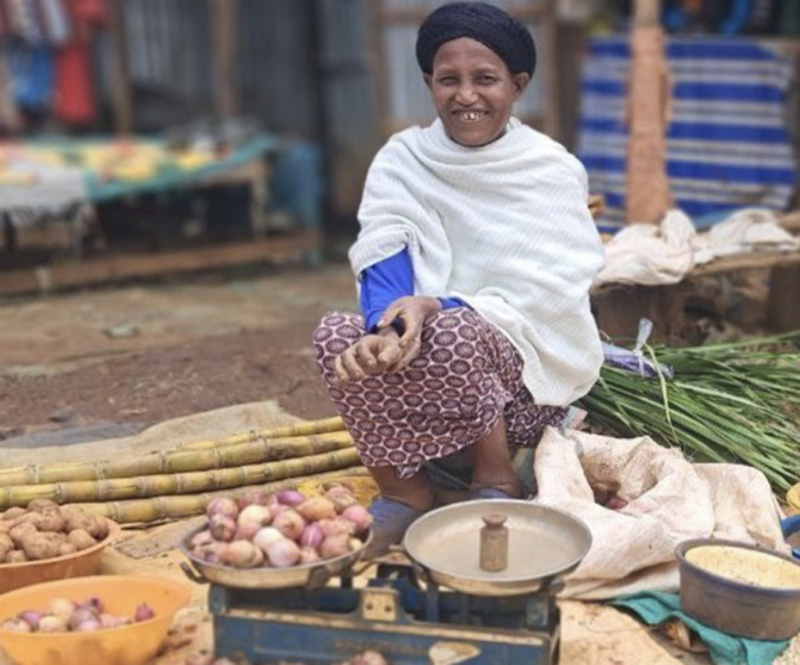
Enku was later selected to receive 7,000 ETB (about $45) through a different project implemented by IOCC to start a small business. She began selling potatoes, sugarcane, onions, and corn in the local market. Now she earns enough—typically 400 ETB (about $2.50) per day, and up to 2,000 ETB (about $12) on busy market days—to cover her rent and daily expenses. Through determination and help from IOCC, Enku’s journey shows how healthcare access and livelihood support can transform lives.